A broadsheet for the LA Times that deepens appreciation for animation by celebrating yet critically examining the storytelling, design, and engineering that bring each film to life.

A broadsheet for the LA Times that deepens appreciation for animation by celebrating yet critically examining the storytelling, design, and engineering that bring each film to life.

A broadsheet for the LA Times that deepens appreciation for animation by celebrating yet critically examining the storytelling, design, and engineering that bring each film to life.

Skills

Information Design, Publication

Software

Photoshop, Illustrator, InDesign, Excel

Team

Cleo Williams

Duration

8 weeks (Student Project)
Structuring the Narrative

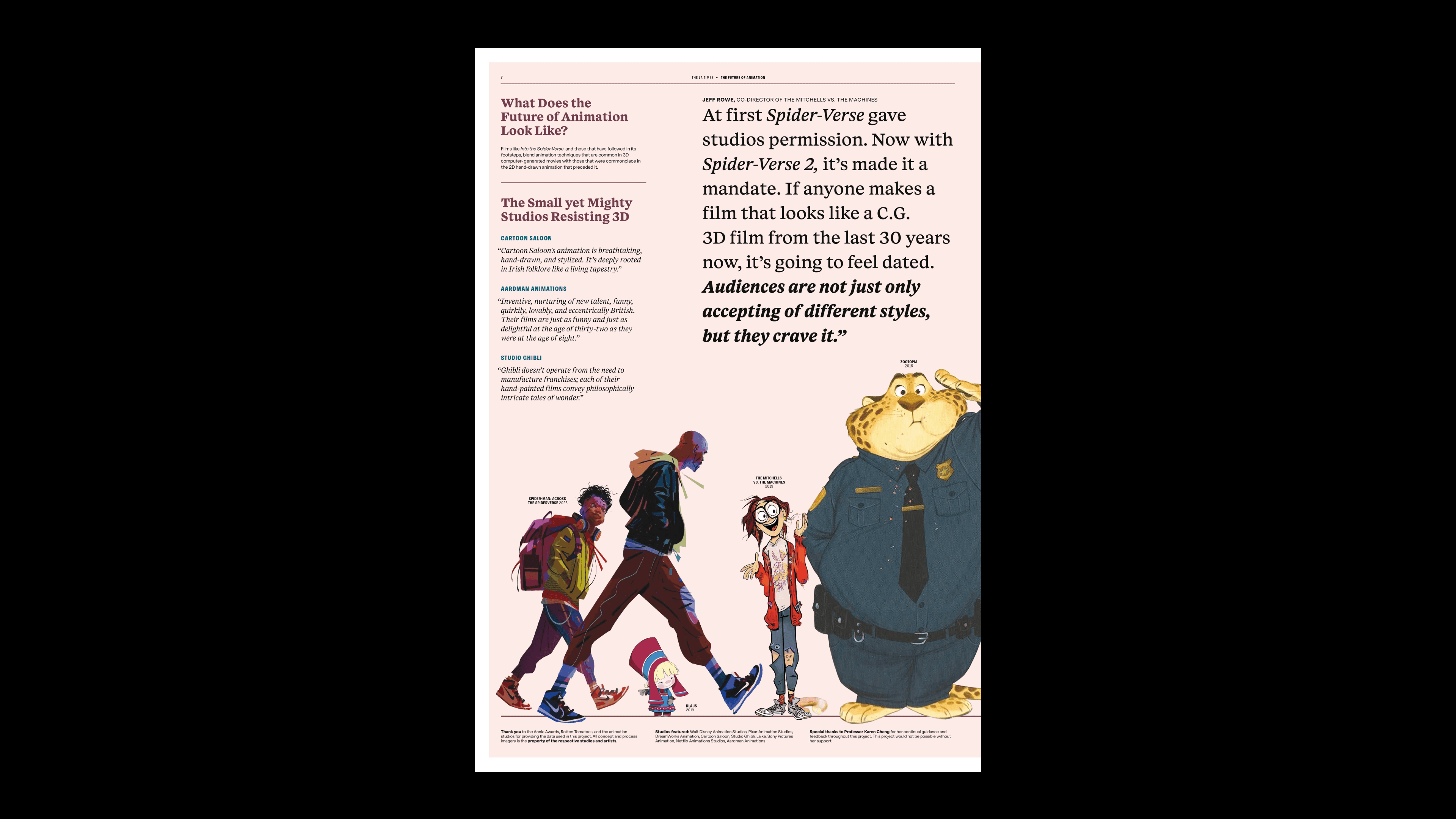
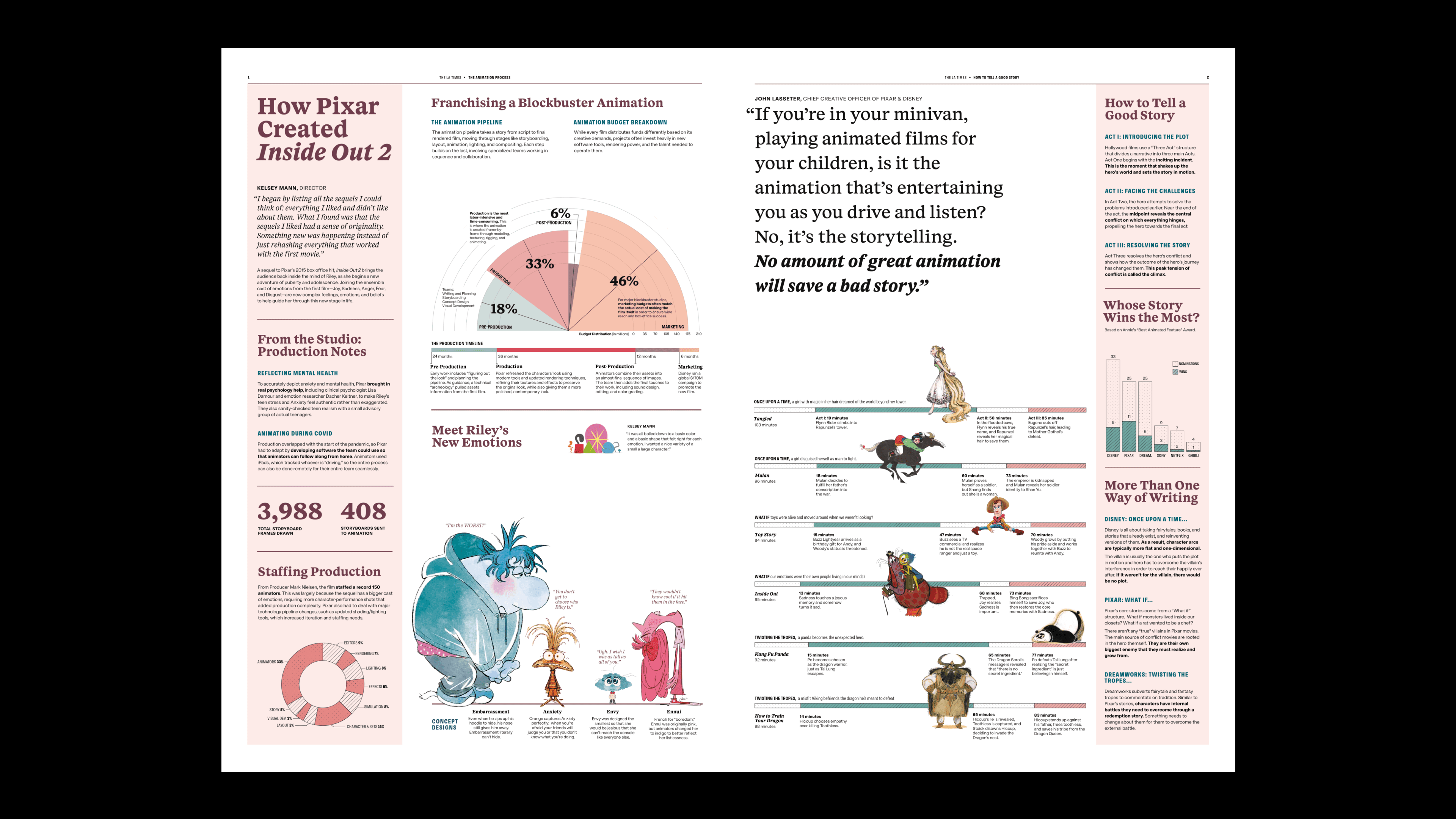
I structured the story to frame animation through both familiarity and change: using Inside Out 2 to introduce storytelling and production foundations, contextualizing studios within a pivotal experimental era, and ending with the people shaping animation today.
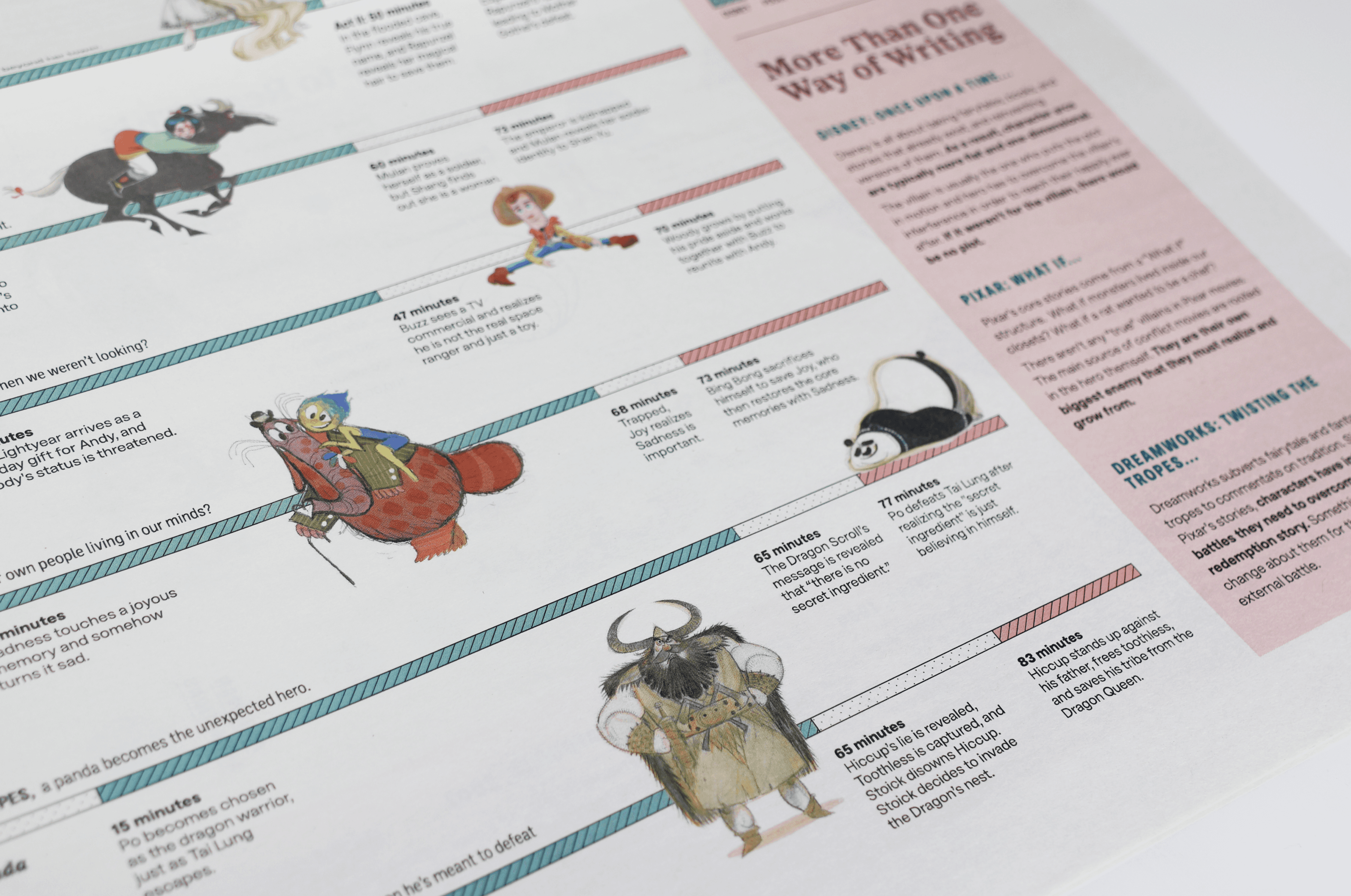
I structured the story to frame animation through both familiarity and change: using Inside Out 2 to introduce storytelling and production foundations, contextualizing studios within a pivotal experimental era, and ending with the people shaping animation today.
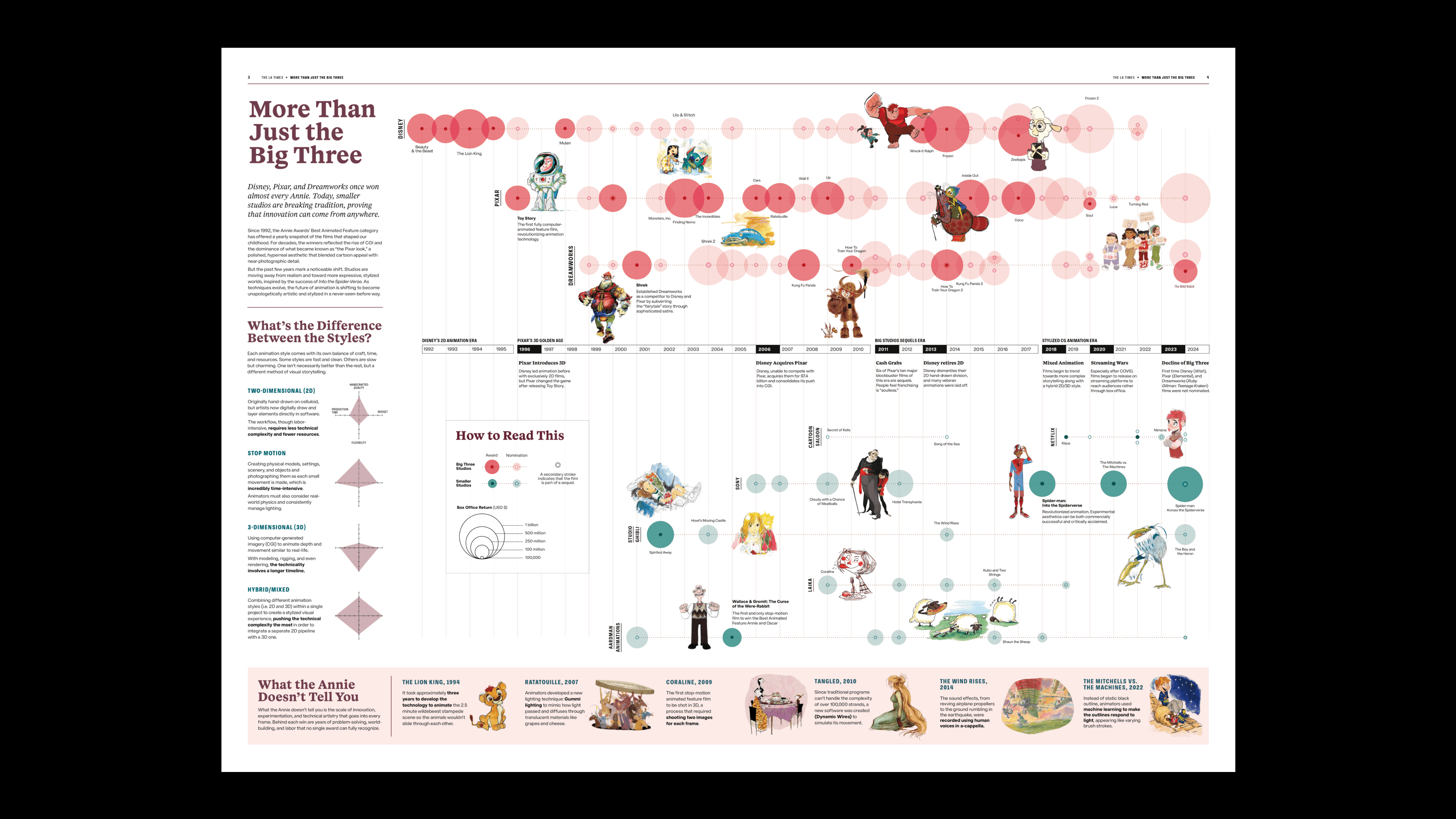
I structured the story to frame animation through both familiarity and change: using Inside Out 2 to introduce storytelling and production foundations, contextualizing studios within a pivotal experimental era, and ending with the people shaping animation today.
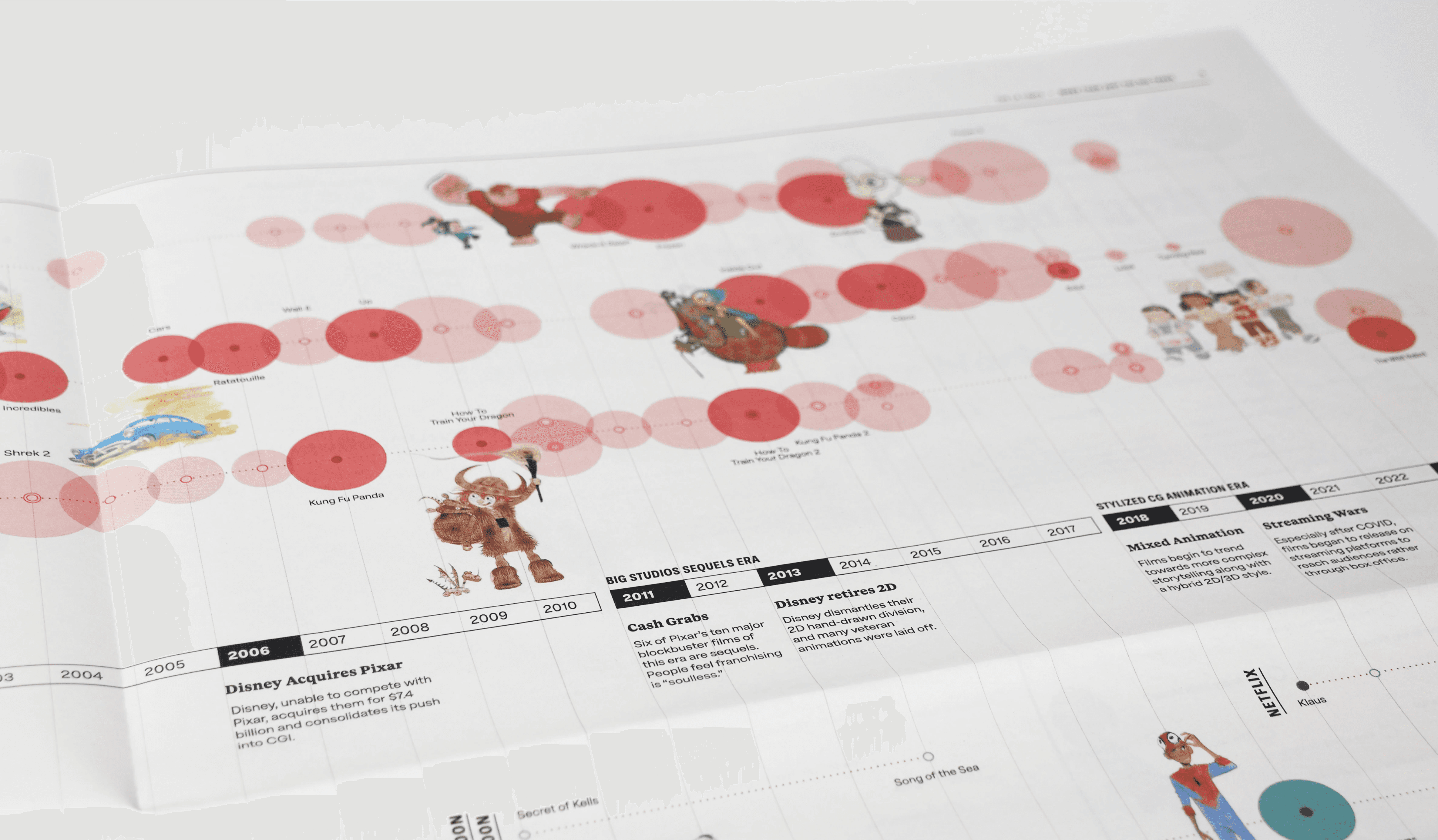
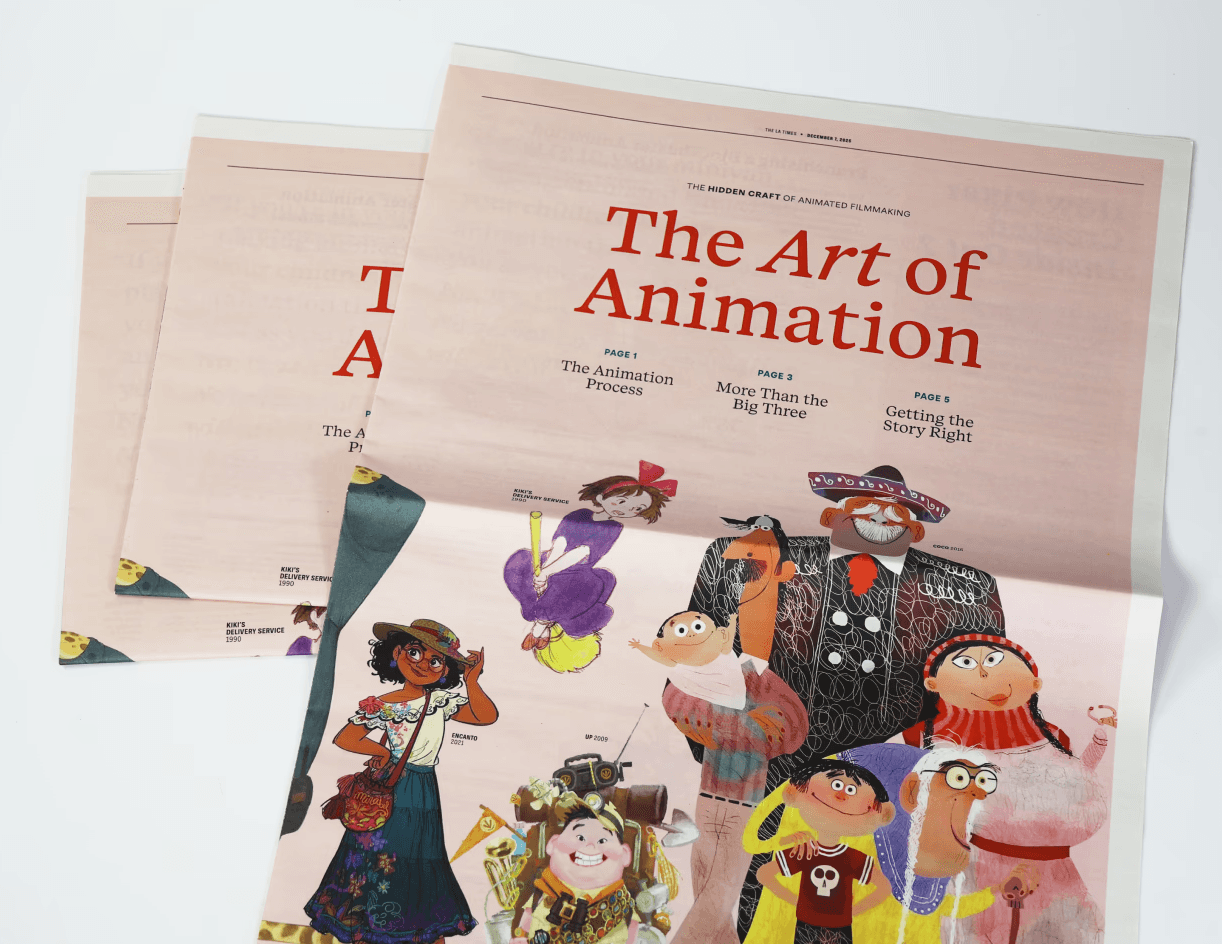
Unifying Different Art Styles
This was one of the biggest design challenges since each studio's styles are visually distinct and would not look visually compatible together.

This was one of the biggest design challenges since each studio's styles are visually distinct and would not look visually compatible together.

This was one of the biggest design challenges since each studio's styles are visually distinct and would not look visually compatible together.

Because we wanted to uncover the process of animation, it made the most sense to curate film concept sketches and early character designs, which were often looser, sketchier, or more painterly, to bring a greater sense of cohesion.

Because we wanted to uncover the process of animation, it made the most sense to curate film concept sketches and early character designs, which were often looser, sketchier, or more painterly, to bring a greater sense of cohesion.

Because we wanted to uncover the process of animation, it made the most sense to curate film concept sketches and early character designs, which were often looser, sketchier, or more painterly, to bring a greater sense of cohesion.

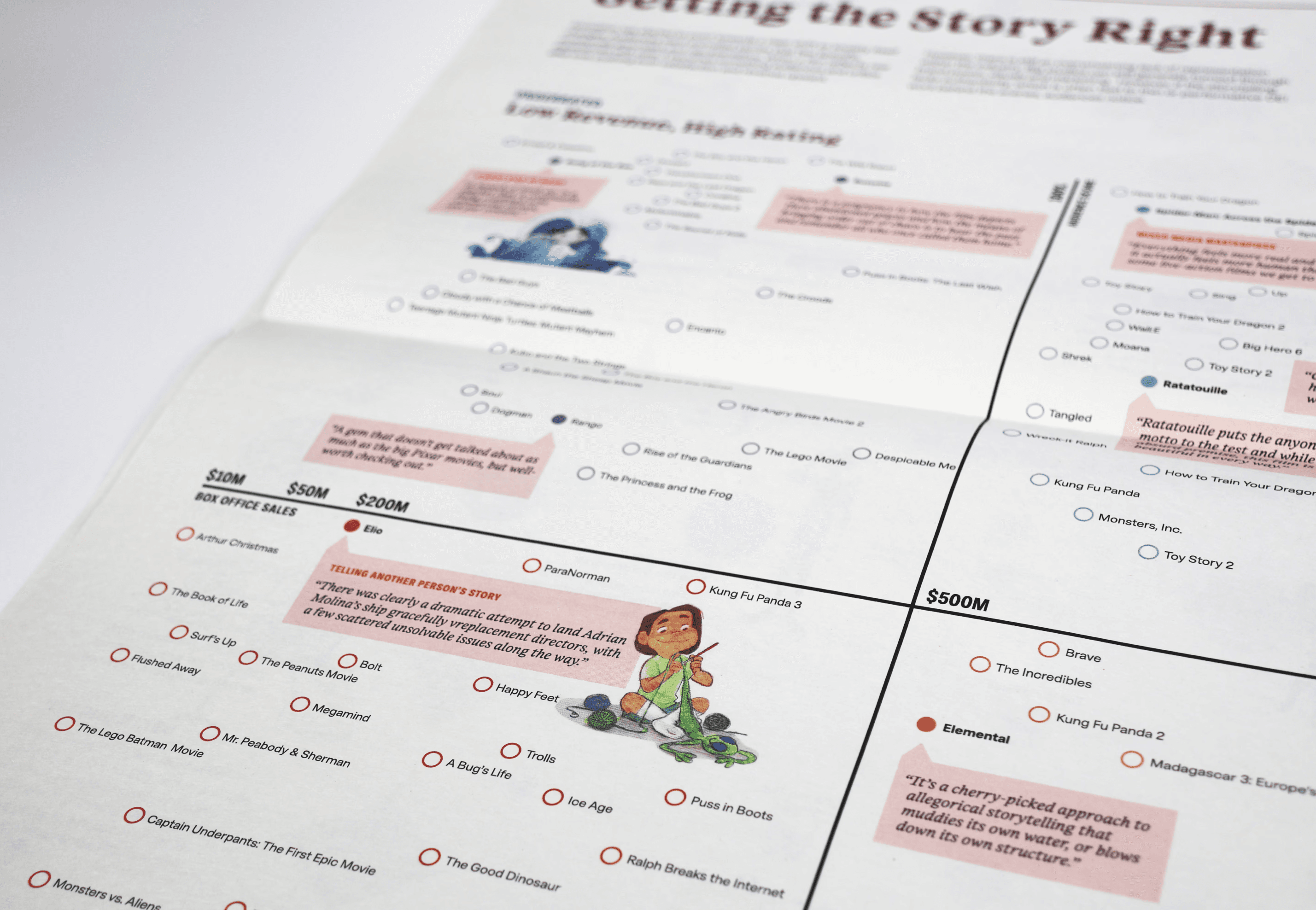
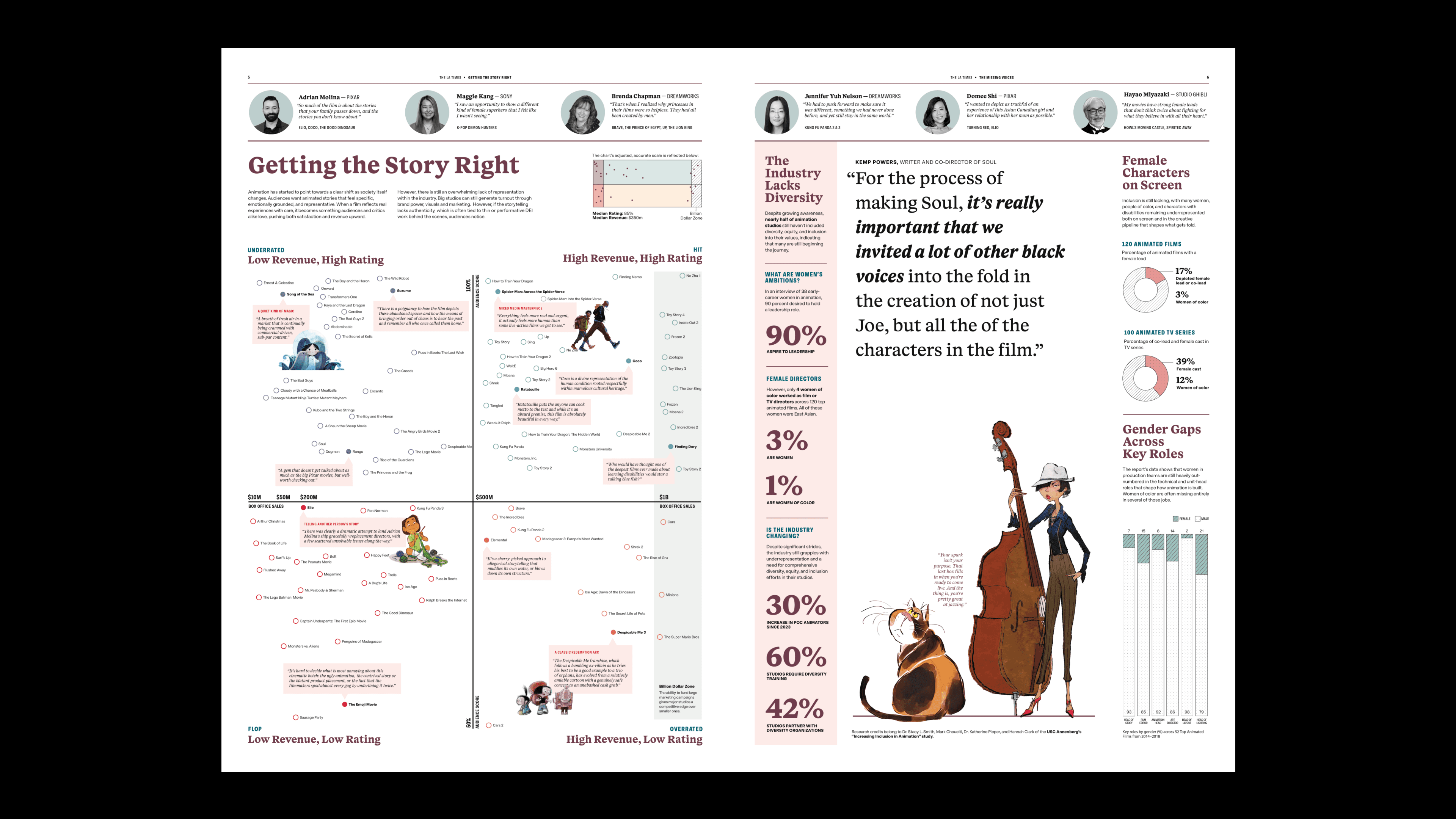
Learning to Tell Stories through Data

Finding the "best" way to visualize the data required repeated experimentation (adjusting scales, proportions, and formats) to balance accuracy with clarity.

Finding the "best" way to visualize the data required repeated experimentation (adjusting scales, proportions, and formats) to balance accuracy with clarity.

Finding the "best" way to visualize the data required repeated experimentation (adjusting scales, proportions, and formats) to balance accuracy with clarity.

Through layering annotations, I was able to emphasize patterns and guide attention to the insights embedded in the data, learning that thoughtful framing can transform data into narrative.

Through layering annotations, I was able to emphasize patterns and guide attention to the insights embedded in the data, learning that thoughtful framing can transform data into narrative.

Through layering annotations, I was able to emphasize patterns and guide attention to the insights embedded in the data, learning that thoughtful framing can transform data into narrative.